
KALAYAAN 2024
126TH PHILIPPINE INDEPENDENCE DAY
Freedom is our nation’s single desire.
To be genuinely free is to achieve full development, as a single, united, and indivisible nation.
With this desire, let us renew the pledge made by our forefathers imbued with firm confidence in Divine Providence. Let us bind ourselves to support our free and independent Republic, if need be with our lives, with our fortunes, and with our most sacred blessing our honor.
We owe this to our national heroes, who had won for us this freedom that we now enjoy. We owe this to the next generations of Filipinos, to whom we swear to bequeath a stronger and genuinely free republic.
I have said it before and I shall say it once more, I will be with you on that long and uphill road to achieve our dream of freedom : freedom from hunger, freedom from neglect and freedom from fear. As integral actors in our democracy, we are all involved in this collective pursuit of real freedoms. That duty rests with all of us.
Sama-sama tayo babangon muli para sa Bagong Pilipinas!
Mabuhay ang malayang sambayanang Pilipino!
FERDINAND R. MARCOS JR.
17th President of the Republic of the Philippines
FLOATS

THE CRY OF CANDON
25 MARCH 1898, ILOCOS SUR
The Philippine struggle for independence in the locos began with the Cry of Candon that symbolized the national scope of our fight for freedom.
On 25 March 1898, Ilocano revolutionaries were led by Isabelo Abaya liberated Candon from Spanish rule and establishing the Republic of Candon. The Cry of Candon ignited the Second Phase of the Philippine Revolution that would culminate in our independence.

THE TRES DE ABRIL REVOLT
3 APRIL 1898, CEBU CITY
The Filipino fight for freedom was felt in the Visayas. In Cebu, Katipuneros led by Pantaleon Villegas or Leon Kilat gathered their members and launched a surprise attack against the Spanish forces in Cebu City on Palm Sunday, 3 April 1898.
Surprised by the ferocity of the Filipino revolutionaries, both Spanish soldiers and civilians sought refuge in Fort San Pedro until 7 April when reinforcements and naval bombardment forced Kilat and his comrades to withdraw into the countryside where they continued their quest for freedom. Cebu continues to remember Tres de Abril as an important milestone in Filipino liberty.

THE BATTLE OF ALAPAN
28 MAY 1898, CAVITE
After the return of Emilio Aguinaldo from exile, fighting between Filipino revolutionaries and Spanish forces reignited. On 28 May 1898, thousands of Filipino and Spanish soldiers clashed all across Cavite and Laguna with the fiercest fighting around Barrio Alapan, Imus, Cavite.
After hours of combat, Spanish forces exhausted their supply of ammunition and surrendered to Filipino revolutionaries. In celebration of this historic victory, Aguinaldo unfurled in Cavite City, the first Philippine Flag which he had ordered made in Hong Kong to represent the Philippine nation.

THE PROCLAMATION OF INDEPENDENCE
12 JUNE 1898; CAVITE
With large parts of the country under the control of Filipino revolutionaries, Emilio Aguinaldo and his council of advisers began the process of birthing a new nation. On 12 June 1898, citizens and guests gathered at the Aguinaldo’s home in Cavite el Viejo (now Kawit) to witness the formal proclamation of Philippine independence.
The proclamation enshrined the self-determination of the Filipino people to establish a government in their image and to stand equal to the free nations of the world.

THE COMITÉ CENTRAL FILIPINO
10 AUGUST 1898; OVERSEAS
Organized by freedom-loving Filipinos living outside the Philippines, the Comité Central Filipino was set up to lead efforts in supporting the struggle for our independence through the establishment of diplomatic relations and ensuring recognition from free nations, gathering of funds and the purchasing arms and other material needed for the revolution.
Overseas Filipinos also participated in the struggle to defend our independence. Through their efforts, Filipino missions and diplomats were soon campaigning for recognition in America, Europe and elsewhere in Asia.

THE NEGROS REPUBLIC
5 NOVEMBER 1898; NEGROS
Negrense revolutionaries led by General Aniceto Lacson and General Juan Araneta organized a province-wide revolt in Negros Occidental on 5 November 1898. The Filipino forces liberated San Miguel, Silay, and Cadiz, while a quick skirmish in Bacolod City resulted in the Spanish retreating to the convent. In celebration, the Filipino forces unfurled the Philippine flag in the middle of Silay and proclaimed the Republic of Negros.
Spanish governor Isidro de Castro surrendered on the next day, 6 November 1898, after the revolutionaries staged marches with “bamboo cannons” and “wooden rifles” which convinced the Spanish that resistance was futile. By 24 November 1898, a Filipino relief column sent to liberate Dumaguete learned of the Spanish exit from the city which resulted in the total liberation of Negros Island.

THE CRY OF SANTA BARBARA
25 MARCH 1898; ILOILO
Ilonggo freedom fighters liberated the town of Santa Barbara, Iloilo after a short battle against the local Spanish garrison. General Martin Delgado led the Filipino revolutionaries in proclaiming the struggle for Filipino freedom across Panay and raised the Philippine flag which was smuggled across Spanish lines from Jaro by the young revolutionaries Patrocinio Gamboa and Honorario Solinap.
By Christmas day 1898, the Spanish forces evacuated all remaining forces and civilians from Iloilo and the victorious revolutionaries proclaimed the establishment of the Federal State of Visayas.
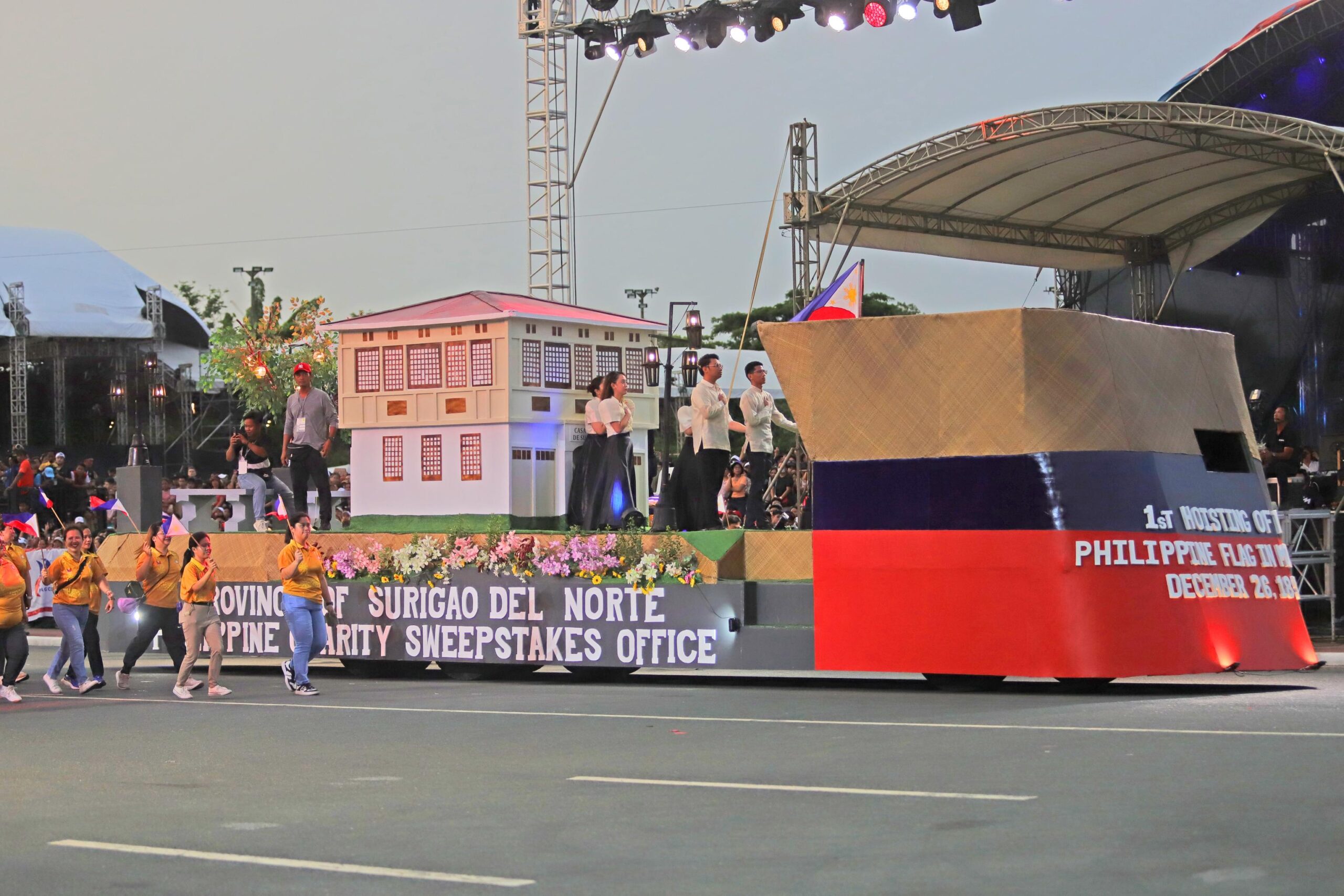
THE FIRST FLAG IN MINDANAO
26 DECEMBER 1898; SURIGAO CITY
In Surigao, the regional capital of Caraga, the Filipinos established a junta under the leadership of Alejandro Gomez to take effective control of the region. To mark the liberation of Caraga, the junta hoisted the Philippine flag atop the Casa Real on 26 December 1898, the first time the Philippine flag flew over Mindanao.
This was later followed by Cagayan de Oro on 10 January 1899 and Butuan on 17 January 1899.

THE SIEGE OF FORT PILAR, ZAMBOANGA
18 MAY 1898, ZAMBOANGA CITY
On 18 May 1899 in Zamboanga City, the Spanish government in the Philippines officially surrendered to the Filipino government after a 20-day battle between the forces of Spanish Governor General Diego de los Rios and General Vicente Alvarez, commander of the Filipino forces in Zamboanga. This would be known as the Siege of Fort Pilar.
Alvarez would later establish the Republic of Zamboanga that was recognized by the Philippine Republic in Malolos.

THE LOWERING OF THE SPANISH FLAG IN JOLO
22 MAY 1899; SULU
The Spanish forces in Jolo were met with resistance from the local Muslim population, including the Tausugs, who were led by their local leaders. They resisted the Spanish colonizers efforts to Christianize the region.
The Spanish flag was officially lowered in Jolo when the Sulu archipelago was transferred to the Sulu Sultanate. However, much to the surprise of Sultan Jamalul Kiram II.

THE SIEGE OF BALER
27 JUNE 1898 TO 2 JUNE 1899; AURORA
The Siege of Baler started on 1 July 1898. The Filipino revolutionaries surrounded the town and cut off the garrison from any supplies, reinforcement, and communication. The Spanish forces remained in isolation for 11 months, until 2 June 1899. Filipinos besieged the Spanish detachment in Baler who refused to believe that Spain had lost sovereignty over the Philippines through the Treaty of Paris.
The peaceful surrender of the Spanish forces in the Siege of Baler is a reminder of the collective history of both countries – a testament of honor, resilience, duty and reconciliation- one that highlights the longstanding bond of friendship that Spain and the Philippines share today.

MALOLOS CONGRESS AND THE FIRST PHILIPPINE REPUBLIC
CONGRESO DE LA REPÚBLICA FILIPINA
5 SEPTEMBER 1898 AND 23 JANUARY 1899; MALOLOS, BULACAN
In lieu of the country’s newfound independence, a government that would serve the people and protect their rights, was imperative. On 15 September 1898, in the town of Malolos, Bulacan, the Malolos Congress was established by Filipino revolutionary leaders as a means to establish a national government for the newly sovereign state.
This sovereign state would be inaugurated later on 23 January 1899 as the First Philippine Republic resulting in the very first constitutional republic in Asia.

THE FIRST CONGRESS
CONGRESO REVOLUCIONARIO | ASAMBLEA NACIONAL
In the decree establishing the Philippine Revolutionary Government on 23 June 1898, Apolinario Mabini envisioned a congress that would advise the President on matters concerning the localities. Inaugurated on 15 September 1898 in Barasoain Church, the Malolos Congress embodied the democratic representation of the Filipino people. It was renamed as the National Assembly through the 1899 Philippine Constitution. Its spirit lives on through the current Philippine Congress.

THE SUPREME COURT
CORTE SUPREMA
Justice and human rights were enshrined in the 1899 Philippine Constitution by aspiring to establish the Supreme Court. However, it was never created owing to the objection of Congress to President Emilio Aguinaldo’s nomination of Apolinario Mabini as Chief Justice, followed by Aguinaldo’s dissolution of the central government in Tarlac in November 1899 due to the 1899 Philippine-American War. While the institution was being established, it was the Real Audiencia of the Spanish colonial government that functioned.

FOREIGN AFFAIRS DEPARTMENT
SECRETARIA DE NEGOCIOS EXTRANJEROS
International recognition of our sovereignty was painstakingly campaigned by the First Philippine Republic through its Secretaria de Negocios Extranjeros. Filipino patriots were appointed in the U.S., Hong Kong, Japan, England, Spain, and Australia. The current Department of Foreign Affairs proudly upholds this diplomatic heritage emanating from their first secretary, Apolinario Mabini.

THE INTERIOR DEPARTMENT
SECRETARIA DE INTERIOR
The First Philippine Republic strived to revitalize local governance and ensure people’s well-being and protection. Thus, it established the Secretaria de Interior. It evolved from the Secretaria de Policia y Orden interior of the 23 June 1898 decree, attached to it were the Centro de Communicaciones and Centro de Higiene, predecessors of the present-day Department of Information and Communications Technology and Department of Health.

THE FINANCE DEPARTMENT
SECRETARIA DE HACIENDA
The First Philippine Republic strived to generate funds to continue defending the country, stabilize peace and security, and bring development to the countryside. It established the Secretaria de Hacienda, envisioned a central bank, issued the Republican currency, and prepared a national budget.

THE WAR AND NAVY DEPARTMENT
SECRETARIA DE GUERRA Y MARINA
The founders of the First Philippine Republic braced two successive armed struggles and the need for a strengthened, disciplined, and well-equipped army was imperative. The Republican Army gallantly raised our flag and asserted that this land is for Filipinos. Thus, the Secretaria de Guerra y Marina was established. This evolved from two original agencies the 23 June 1898 decree created : the Secretaria de Marina y Comercio and Secretaria de Guerra y Fomento.

THE EDUCATION DEPARTMENT
SECRETARIA DE INSTRUCCIÓN PÚBLICA
The First Philippine Republic guaranteed to secure the future of the children and the youth through the Secretaria de Instrucción Publica. Part of its vision was the reopening of the schools and the establishment of its university, the Universidad Literaria de Filipinas. The Secretaria was originally part of the Secretaria de Justicia, Educacion y Higiene [Department of Justice, Education, and Health] based on the 23 June 1898 decree and later transferred under the Secretaria Guerra y Fomento [Department of War and Public Works].
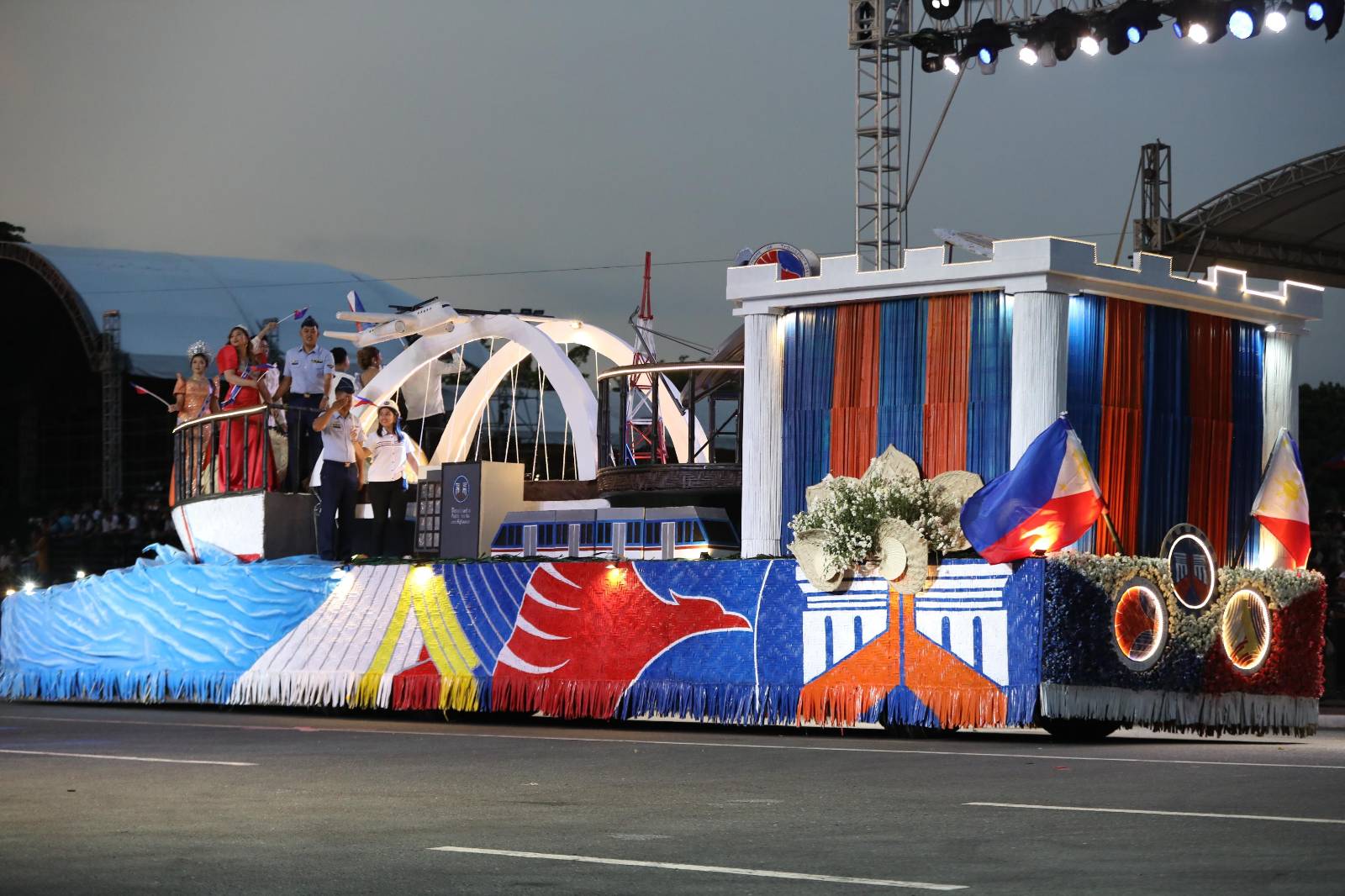
COMMUNICATIONS AND PUBLIC WORKS DEPARTMENT
SECRETARIA DE COMUNICACIONES Y OBRAS PÚBLICAS
Although preoccupied with its war against Spain and the U.S., the First Philippine Republic envisioned rolling out government infrastructure to enhance the well-being of the people through the Secretaria de Comunicaciones y Obras Públicas. It also managed transportation assets and communication facilities for the benefit of our fight for independence. This agency came from two pioneer departments created under the 23 June 1898 decree, namely the Secretaria de Guerra y Fomento and Secretaria de Policia y Orden interior.

AGRICULTURE, INDUSTRIES, AND COMMERCE DEPARTMENT
SECRETARIA DE AGRICULTURA, INDUSTRIAS Y COMERCIOS
The Secretaria de Agricultura, Industrias y Comercio was a manifestation of the First Philippine Republic’s commitment to ensure food security, the development of local industries, and the revitalization of international trade. This agency originated from three departments created by the 23 June 1898 decree : the Secretaria de Hacienda y Industria, Secretaria de Marina y Comercio, and Secretaria de Guerra y Fomento.